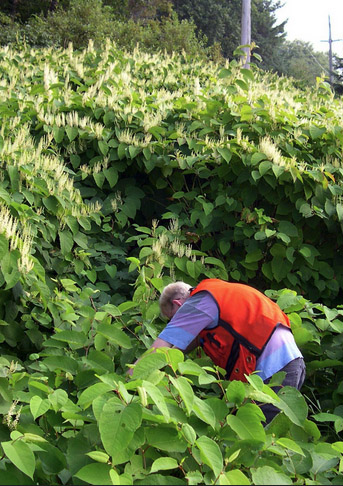
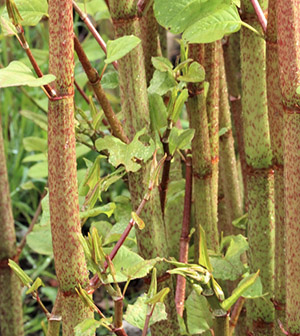
First Step to Control Knotweed: Cut in Early June
Knotweed forms dense thickets that cause erosion, displace native species, and damage infrastructure – including septic systems, roads, foundations, bridges, and more.
Controlling Knotweed is a multi-step, multi-year process. This is just an intro with links to detailed instructions below. The plants spread primarily through underground rhizomes and plant fragments, so it’s important to cut the plants carefully, contain the cuttings, and monitor the site! The roots can go deep and extend several feet beyond the above-ground plant.
June – July BEFORE flowering: Make clean single cuts through the stem with blade cutters or hand tools; DO NOT mow, brush hog, or string-trim. After cutting, either spread the plants on plastic in the sun to dry out, or bag them in heavy-duty (7 mil) bags. This early cutting forces the plants to resprout and weakens the rhizomes. Clean tools and check clothing to avoid transferring Knotweed to a new site.
Second step: Decide whether to smother the Knotweed or use herbicides. **Note: if not your own property, a state licensed applicator is required to use herbicide.**
If choosing herbicides, follow state laws and Best Management Practices. If smothering, mulch the area several feet beyond the perimeter of the plants, cover with heavy plastic, secure the edges and weight the top of the plastic. The goal is to ensure light cannot reach the plants and nothing can penetrate the plastic cover from above or below.
~ Kelly Short, Conservation Commission
Please read these guides from the NH Dept. of Agriculture and carefully follow all steps:
Japanese Knotweed Control (short version):

Japanese Knotweed Control (long version):

Managing Invasive Plants:

Disposing of Non-Native Plants: